

A Review of “Gaslighting: Recognize Manipulative and Emotionally Abusive People—and Break Free” by Stephanie Sarkis.
Sitting in prison provides ample time for self-reflection and reading self-help books. I am incarcerated for life. Therefore, I want to figure out what factors led me to such a predicament, and change those parts of myself for the better. They call this process “rehabilitation.” Such factors include my ADHD diagnosis, my high “adverse childhood experience” score, and that I have been gullible without a strong sense of self — thus, easily influenced.
According to Stephanie Sarkis, these factors make an easy target for manipulators, especially gaslighters. I learned this from her book “Gaslighting: Recognize Manipulative and Emotionally Abusive People — and Break Free.”
Sarkis is a private clinician specializing in ADHD, anxiety, and chronic pain. She is also a Florida Supreme Court-certified family mediator. She’s had large caseloads of survivors of gaslighting and has witnessed gaslighters in action. She wrote this book to educate people about gaslighters and how to resist their tactics. Sarkis also offers resources to gaslighters for seeking help to change those negative aspects of themselves.
The term originated from a 1938 play titled “Gaslight” about a husband who tries to trick his wife into believing she is going insane. Yet the word was not added to the Oxford Dictionary to describe this sort of manipulation until 2004. Today, it refers to psychological manipulation that happens so slowly that the victim is unaware of the manipulation occurring.
To be more specific, Sarkis describes gaslighters as individuals who:
- use your own words against you
- plot against you
- lie to your face
- deny your needs
- show excessive displays of power
- try to convince you of “alternative facts”
- turn your family and friends against you
They do this with the goal of watching you suffer, consolidating their power, and increasing your dependence on them.
Sarkis writes that men and women manipulate equally. However, Sarkis specifies that often women are not taken as seriously as they should be. And gaslighters are often perpetrators of domestic violence — including physical violence, financial, sexual, and/or emotional abuse. Some people end up in prison because of this kind of abuse. Prisons can also be centers of violence. For these reasons, I happen to be reading this book in the perfect learning environment — the world’s largest prison for women — Central California Women’s Facility (CCWF).
Here are some examples of techniques often used by gaslighters, outlined early in the book, that I witness regularly at CCWF.
I was standing in the medical line. And as I got close to the front, I went to get my cup of water. While at the fountain, a friend joined me to ask me a question. After a moment of talking, I returned to my spot in line, which had grown longer. Someone near the end of the line yelled loudly for me to hear: “I can’t stand people who think they can just cut everyone in line.” I turned around and explained that I was already in line and only took a moment to get water. The gaslighter responded, “I’m just joking, don’t be so sensitive.”
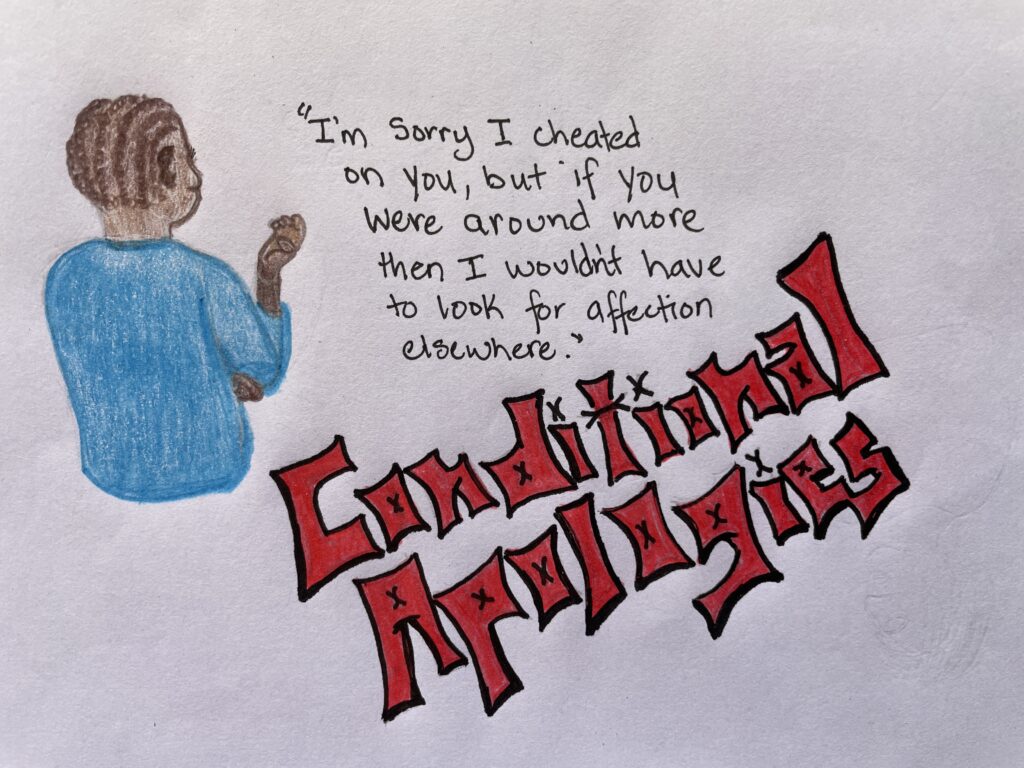
This teasing is different from regular teasing with friends. Gaslighters practice perpetual teasing that has a mean quality to it, and it is intended to jab at you, then covered up as “a joke” or “teasing.” The important part is that when requesting them to stop, they won’t and never will. Additionally, gaslighters cannot take personal responsibility for their actions. They usually have ego-centric personalities where everything they do and say meets the needs of their ego. They also don’t think anything is wrong with them; everyone else is the problem.
Conversations around me regularly feature triangulation. Instead of speaking to someone directly, gaslighters will go through a mutual friend. This form of manipulation can be either direct(“tell so-and-so…”) or indirect (“I really wish so-and-so understood how I feel about…”) in hopes that the mutual friend will tell so-and-so, delivering the message for the gaslighter.
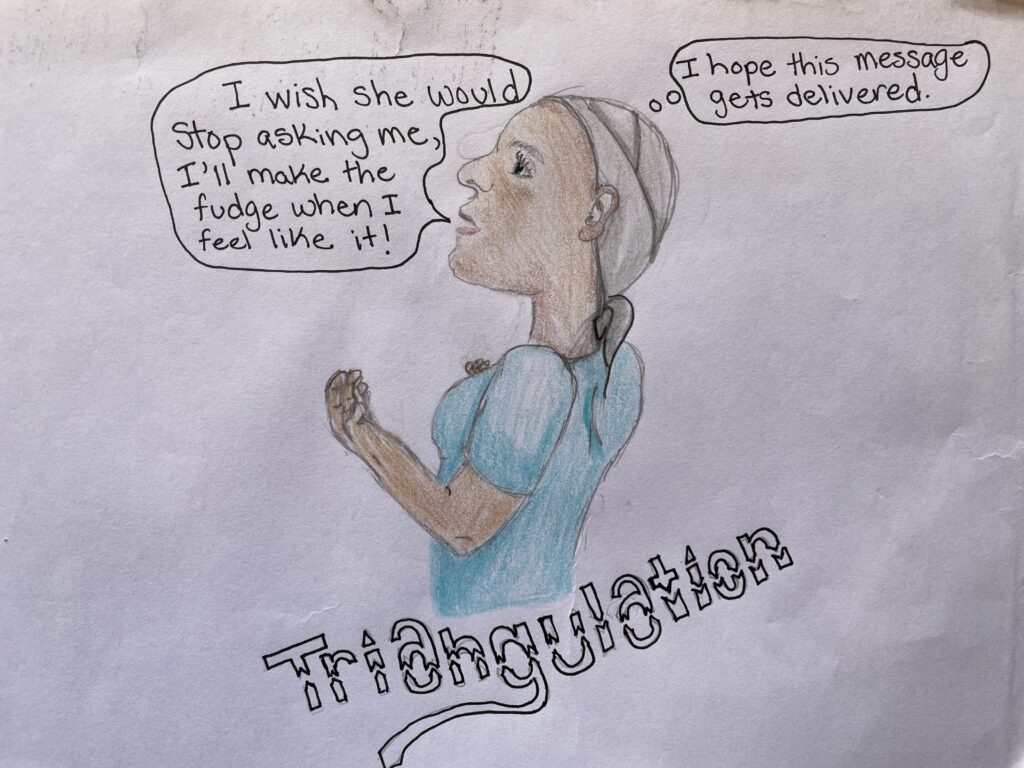
For example, as heard on the prison yard, “My mom told me auntie wanted to tell me she didn’t agree with how I parented my child.” Or “My ex told me my son said to him that I needed to back off, and that he promised my son that he wouldn’t say anything to me.”
The second quote also includes a strategy called splitting. Gaslighters love to pit people against each other — divide and conquer. It makes them feel like they have some form of power and control. Other examples can entail lying to one friend about another, and/or disclosing that a mutual friend said something bad about you that was never really said.

The golden rule from Sarkis is: Unless a person says something to you directly, assume what you hear from third parties is not true!
Gaslighters also include those friends and peers who steal your thunder. They manipulate others into doing work for them, then take credit for it. They lie to get ahead. They seem to compete with everyone to be “the best” and then have bursts of anger when things don’t go their way. They may even sabotage other people’s work.
Gaslighters’ techniques listed in Chapter 1 can look different in various types of relationships. For instance, your gaslighting mother can use triangulation, but it will look different from how your gaslighting friends use the same tactic. Hence, many of Sarkis’s chapters are organized by relationship themes. The reader can turn directly to the chapter on their boss, their co-worker, a politician running for their district, their family (parents, siblings, extended family), their significant others, their friends or frenemies, and religious gaslighters.
For example, parents who gaslight can imprint some of their manipulative techniques onto their children, who in turn pick up the manipulation tactics as coping mechanisms for survival in the home environment. A chapter on gaslighting parents helps people cope with their parents’ manipulative behaviors, draw boundaries, and learn how to discard the maladaptive coping tools picked up as children that they no longer need.
Another interesting chapter is on gaslighting used in politics and social media. Politicians make laws that we must all abide by, which is why Sarkis writes, “It’s so important that citizens use their sacred voting right and be willing to step up and take action when people in public office are disregarding the needs of the public.” But in order to do that, one needs to recognize a gaslighter in public office. Some tactics used by political figures who are gaslighters include making promises during campaigns that are not fulfilled after the election or turning citizens against a marginalized group.
A gaslighter could be anyone, but not everyone is a gaslighter. The key distinction is a pattern of behavior that is essential to the gaslighter’s identity.
According to Sarkis, you cannot tell a gaslighter that they are gaslighting you or someone else — they won’t see it because of their cognitive dissonance. However, it is possible for a gaslighter to figure it out on their own, and then they can seek help. Chapter 11 in her book talks more about gaslighters seeking to change and offers resources.
After reading this book a few times over, I am able to protect myself from various gaslighting tactics that I often encounter in this environment. I further develop this skill through experiences — the successful ones, and even the unsuccessful ones — where I learn from my failures. It is empowering to take control of my own life and not let someone else manipulate my strings like a puppet.
CJ Black writes from Central California Women’s Facility in Chowchilla, California. She is a contributing writer for CCWF Paper Trail.